When i started skateboarding, I mostly skated at a nearby sports rink. After a while it became pretty boring because there were no obstacles to practice on. I wanted to learn how to skate ramps, but there were no nearby skateparks and the closest decent was at the next city, which is where i first learned how to skate down ramps. It was after that when I came up with the idea of building our own ramps.
I started thinking about how we could bring ramps to our rink so they could be used by more people in the community. The rink is used for many activities, so permanent ramps would not work. I proposed the idea in our local RUA+ group, a community project focused on improving our neighborhood through events and outdoor projects, to build movable wooden skate ramps that could be used for skating but also easily moved when the space was needed for other sports.
I looked into a few ramp designs and different types of ramps. I also visited a place called Kokua Surfarm where they had wooden ramps like quarter pipes and half pipe, that helped me understand their design and structure. With the help of Mirco, a friend and carpenter who has experience building ramps, we began planning the ramps. We first designed them in 3D and then built small cardboard models to test the dimensions. We had a budget of 500€ so we already planned the ramps with that in mind.
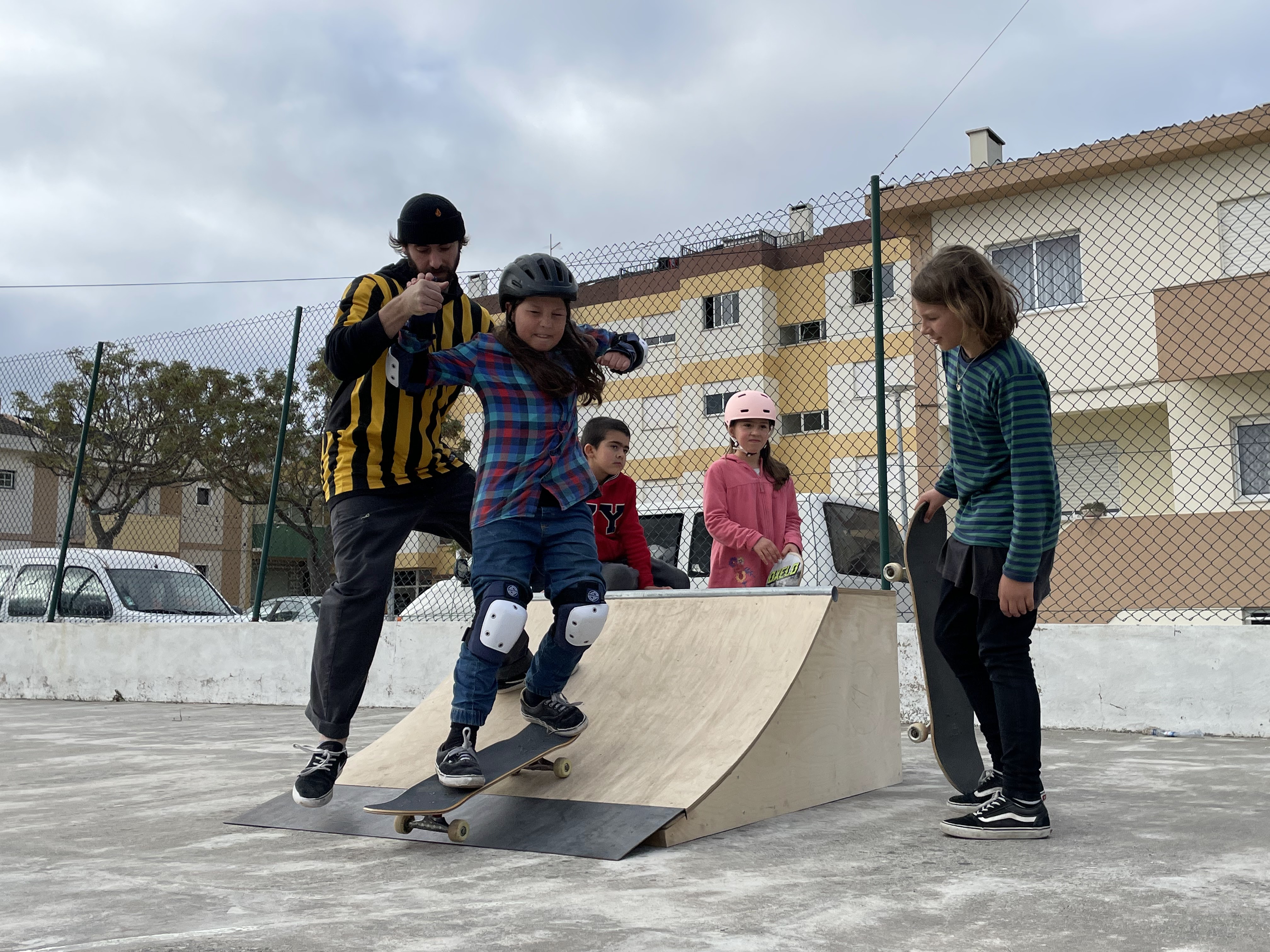
We settled on two quarter pipes, each about 125 cm wide and 60 cm tall, so they could be used separately, side by side, or facing each other like a mini half pipe. To make them easy to move, we added wheels and cut out handles so they could be easily transported. Metal coping was added to the top for grinding, and metal plates at the bottom made a smooth transition from the ground to the ramp.
We organized a build day, and with the help of Mirco and my brother Manni, we cut the wood, assembled the frames, attached the curved surfaces. Most of the wood had to be recut because it was slightly too big. We tested the ramps the same day to see how they felt to skate. The following weekend we improved them by adding the wheels, permanently attaching the metal plates, cutting the handles, adding rubber under the metal plate to reduce noise, and sealing the wood so it would last longer outside.
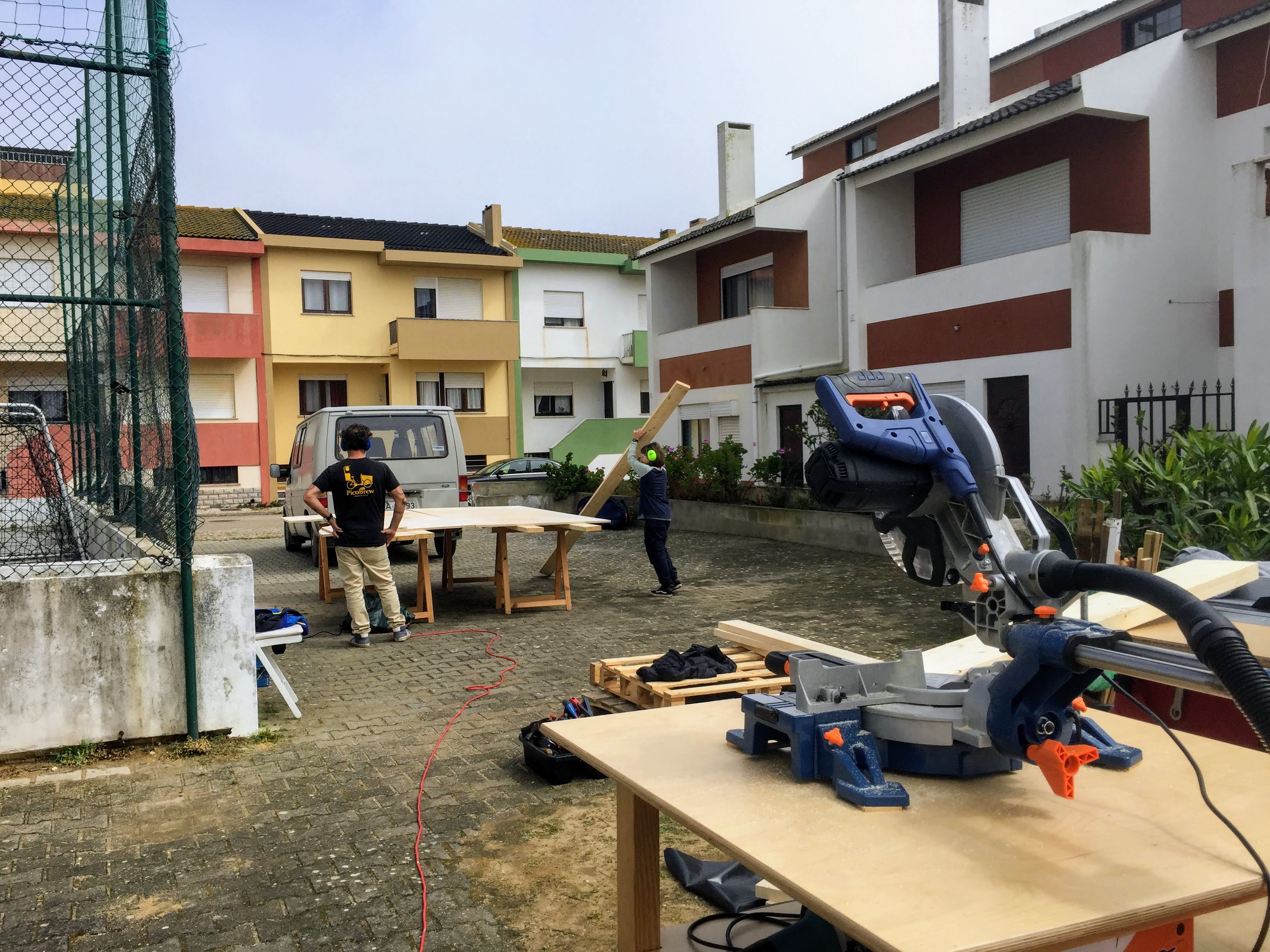
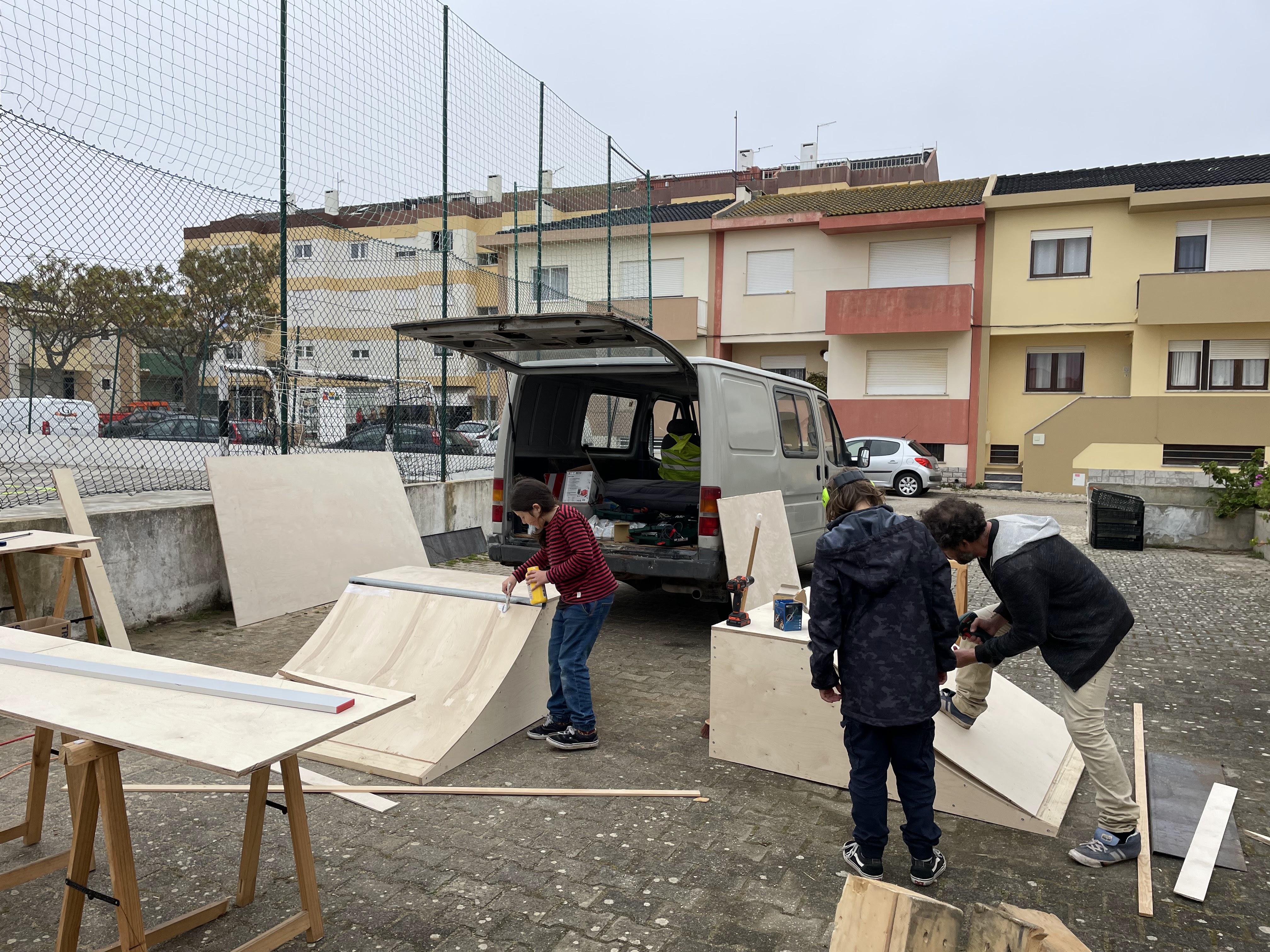
Once the ramps were finished, they were used regularly.
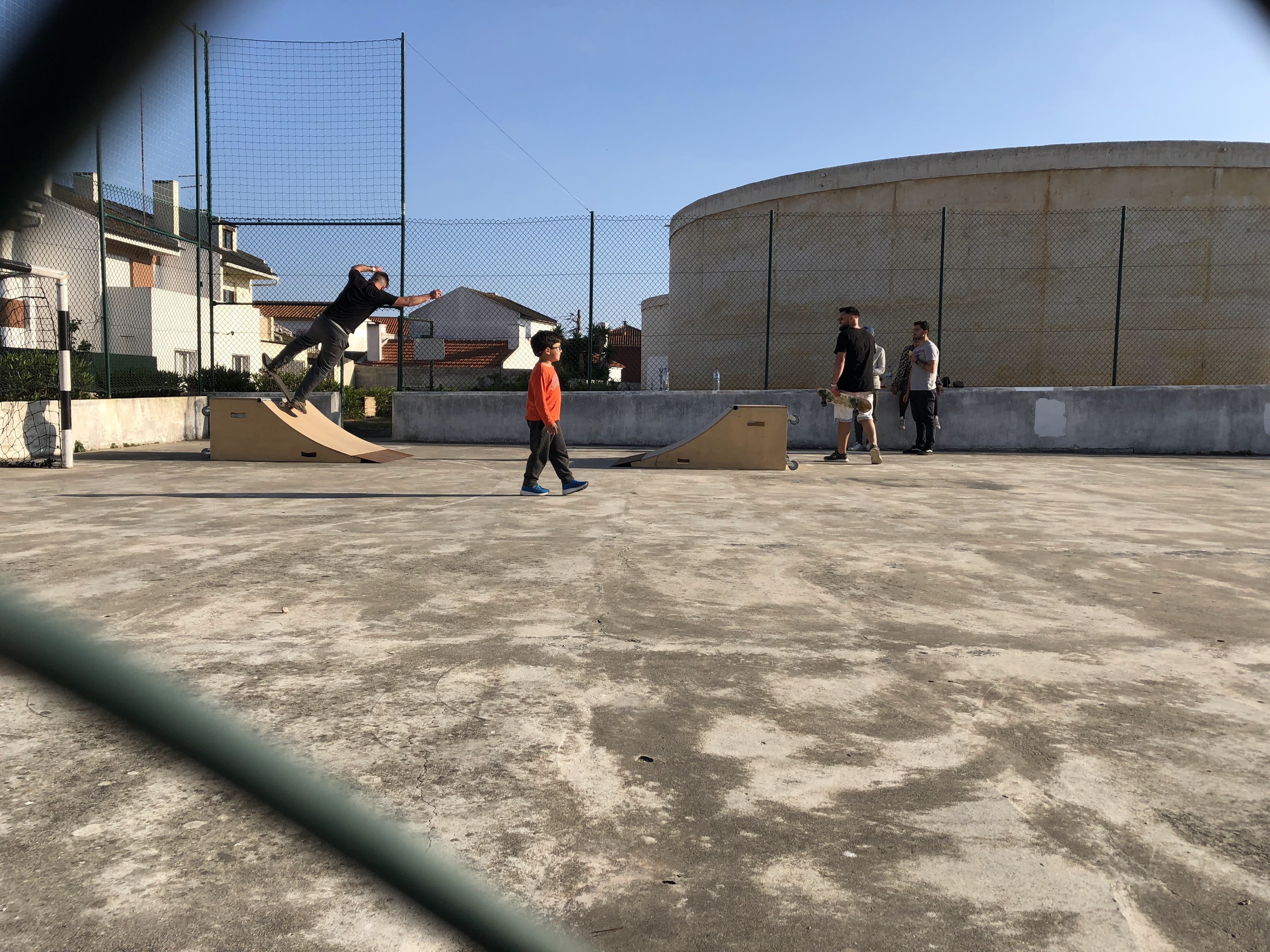
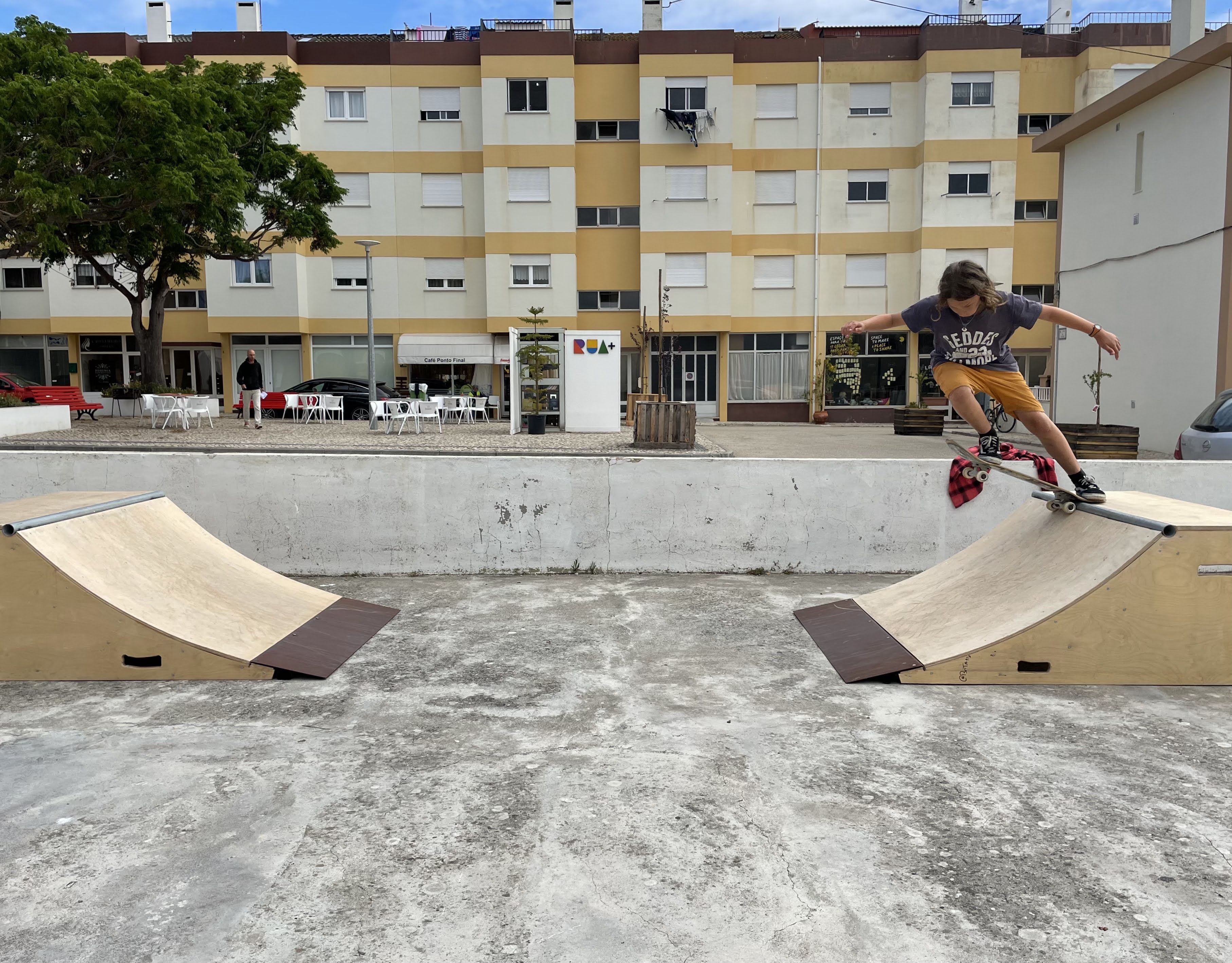
I also helped start a weekly skate session called “Skat’ana”, where Sergio a more experienced skater, started teaching anyone who wanted to learn every Wednesday. The ramps made it possible for anyone to come and skate at the rink.
I was around 11-12 when I did this, but I still felt like it was really my project. Of course I couldn’t have done it without the help of my dad, Mirco, and the rest of the RUA+ group, but I felt very involved and in control of the whole process. It definitely took longer than I expected, partly because we relied on Mirco who had other jobs going on. But it was a really good experience overall, and it changed how I approach new projects. Having gone through the whole thing from idea to something people actually use gave me a much better sense of what it takes to make something real.